


Dr. Mahadevan Seetharaman
Dr. Mahadevan Seetharaman is Dean of the California College of Ayurveda and a Duke Integrative Healthcare Leader and Professor at Hindu University of America. He holds a PhD in Medicinal Chemistry from the University of Minnesota and completed postdoctoral research at the Cleveland Clinic Lerner Research Foundation. He is the founder of Ayurveda Living, co-founder of the Texas Ayurveda Professionals Association (TAPAS), and previously served as CEO and Managing Director of the Institute of Ayurveda & Integrative Medicine (I-AIM) in India. A certified Ayurveda Diet & Nutrition Consultant and Yoga Teacher, he succeeded CCA founder Dr. Marc Halpern and now leads the institution’s strategic, academic, and operational direction.
By Dr. Mahadevan Seetharaman
Dean, California College of Ayurveda
Hindu University of America
How do we collectively build the future of Ayurveda in the United States? That question sat at the center of one of the most meaningful outcomes of the 17th International World Association for Vedic Studies (WAVES) Conference. In addition to the fascinating exchange of ideas during the conference itself, the focused discussions that continued after it ended remain with me.
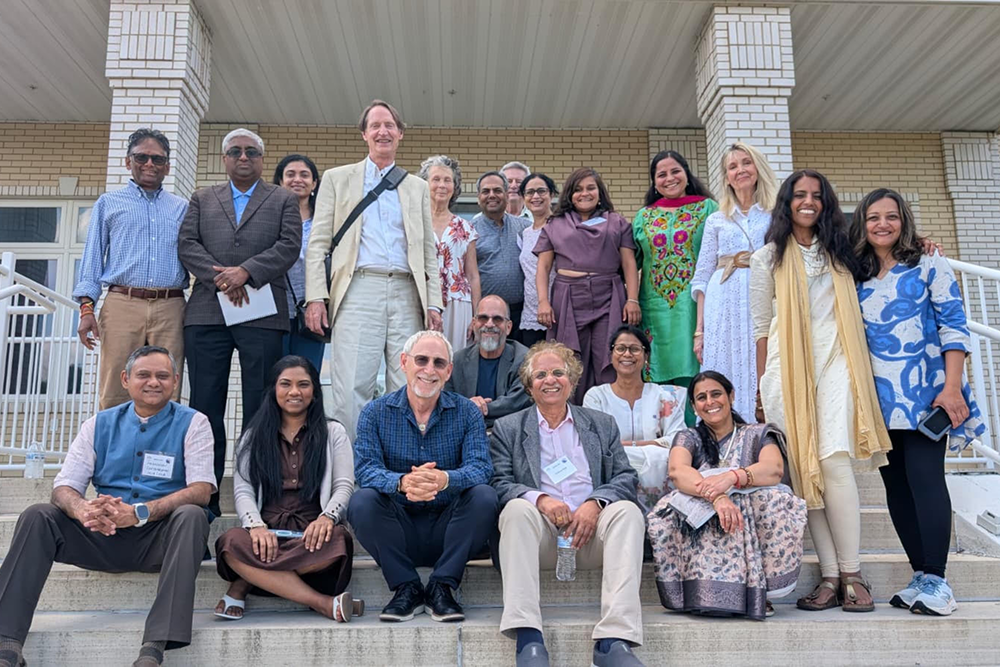
On August 3, 2026, immediately following WAVES 2026, a distinguished group of educators, researchers, clinicians, administrators, and professional leaders gathered at Maharishi International University (MIU) for a day-long post-conference workshop titled “Ayurveda Education in the US: Standards, Integrity, and the Future.”
Conferences often inspire new ideas. This workshop was designed to do something more: turn those ideas into a shared answer for where the profession goes next.
The workshop was organized by Vaidya Vandana Baranwal, Convenor of the 17th International WAVES Conference and Faculty at Hindu University of America (HUA). Her vision brought together leaders representing universities, colleges, researchers, clinicians, and professional organizations to engage in thoughtful discussion on strengthening academic quality, preserving authenticity, and preparing Ayurveda for the next generation of practitioners and educators.
Unlike traditional conferences that primarily showcase research presentations, this workshop focused on collaborative problem-solving. Participants examined practical strategies for developing stronger educational standards, improving clinical training, expanding research capacity, and creating a unified vision for the profession.
The workshop featured four expert panels, each addressing a critical pillar of Ayurveda’s future in North America.
Panel One: Accreditation and Academic Standards
Chaired by Dr. Paul Morehead of Maharishi International University, this session explored how Ayurveda education can align with recognized academic accreditation systems while preserving its classical foundations. Topics included credentialing, degree pathways, clinical supervision, quality assurance, and the role of an independent Council of Schools in developing educational standards.
Panel Two: Curriculum Design and Competency
Chaired by Dr. Marc Halpern, Founder of the California College of Ayurveda, this panel examined competency-based education, minimum prerequisites for entry into Ayurveda programs, integration with modern and biomedical sciences, assessment models, hybrid learning, and the essential knowledge and skills expected of future Ayurvedic practitioners.
As CCA’s founder, Dr. Halpern brought three decades of experience in Ayurveda education, practitioner training, and institutional development to his role chairing the panel — credentials that made him a natural choice to lead the discussion. His chairing of the panel underscored a broader point: that competency-based education and rigorous preparation for modern clinical practice, grounded in Ayurvedic principles, are essential to the field’s future.
Panel Three: Research, Publication, and Academic Credibility
Chaired by Dr. Balram Singh of the Institute of Advanced Sciences, Dartmouth, MA, this session focused on one of the profession’s greatest opportunities: strengthening Ayurveda through high-quality research. Discussions explored practice-based research, publication strategies, institutional research infrastructure, clinician-researcher training, funding opportunities, and building stronger evidence while respecting Ayurveda’s holistic, systems-based approach.
Panel Four: Policy and Future Directions
I had the privilege of chairing the fourth and final session. This discussion examined regulatory challenges, workforce development, ethical practice, digital health, integration into healthcare systems, global collaborations, and a long-term vision for Ayurveda in the United States. Rather than focusing only on today’s challenges, the panel encouraged participants to think strategically about where Ayurveda should be by 2035 and beyond.
The participation of Hindu University of America and the California College of Ayurveda throughout the workshop reflected our shared commitment to academic excellence and collaborative leadership. I was honored to serve as a panelist in the first session on accreditation and academic standards, and to chair the concluding panel on policy and future directions. These discussions underscored the importance of building educational systems that combine academic rigor with the authenticity of classical Ayurveda.
HUA’s leadership was well represented throughout the day. Dr. Ram Rao brought his research expertise to the panel on scholarly standards, research priorities, and clinician-researcher development — contributing directly to the effort to expand Ayurveda’s scientific evidence base. We were also delighted that Shri Kalyan Viswanathan, President of Hindu University of America, joined the final panel, lending his perspective on policy and institutional leadership to a discussion on Ayurveda’s future growth within higher education and integrative healthcare.
Building Ayurveda’s Future Together
The workshop drew distinguished educators and leaders from across the Ayurveda community — institutions, healthcare organizations, and professional associations united by a shared conviction: advancing the profession requires collaboration, not competition. No single institution can shape Ayurveda’s future alone. Credible educational standards, stronger research, defined professional competencies, and real engagement with healthcare systems will all depend on sustained partnership across universities, organizations, practitioners, and policymakers.
That spirit of collective leadership defined the day. Participants agreed: Ayurveda’s future rests on protecting its integrity while embracing innovation, evidence-informed practice, and responsible integration into modern healthcare. The workshop closed with a shared sense of purpose — and the groundwork for accreditation initiatives, competency frameworks, research priorities, and policy recommendations that will guide Ayurveda education for years to come.
On behalf of the California College of Ayurveda and Hindu University of America, I extend my sincere appreciation to Vaidya Vandana Baranwal for organizing this outstanding workshop, to Dr. Balram Singh for his continued mentorship and leadership, to Maharishi International University for graciously hosting this important gathering, and to every participant who contributed their knowledge, experience, and vision. The future of Ayurveda in the United States will not be built by one institution or one conference. It will be built through collaboration, shared purpose, academic excellence, and a collective commitment to preserving one of humanity’s oldest systems of knowledge while preparing it to serve future generations.