


Santiago Suárez CAS
A Sivananda Yoga teacher and the founder and director of Escuela de Ayurveda de California – a school affiliated with the California College of Ayurveda. He has been instrumental in bringing Ayurvedic education to Latin America. A Clinical Ayurvedic Specialist and Panchakarma Specialist, he also holds a degree in psychology from Cornell University and a second degree in Ayurveda, Yoga and Science.
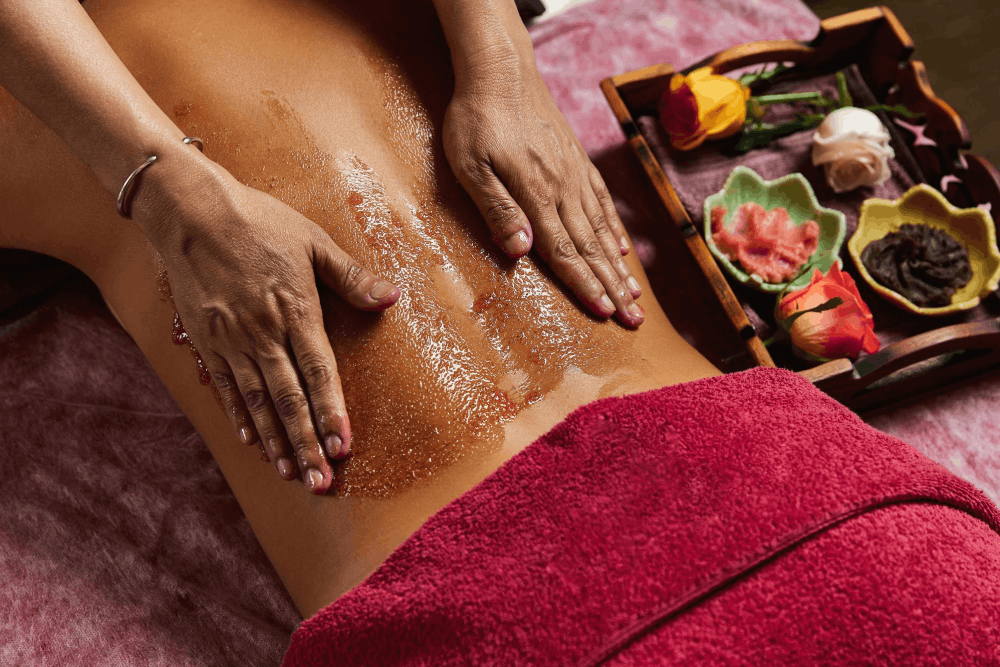
Are you wondering what is abhyanga massage? Abhyanga, derived from the Sanskrit roots abhi (towards) and anga (limb or movement), represents the quintessential Ayurvedic practice of oleation therapy (snehana). In the classical medical tradition of India, the term sneha carries a dual meaning: “oil” and “love,” suggesting that the application of oil to the body is a fundamental act of self-care and cellular nourishment. While often perceived in the West as a simple spa treatment, Abhyanga is a sophisticated clinical intervention designed to balance the biological humors (doshas), specifically Vata, and to facilitate the movement of toxins (ama) from the peripheral tissues toward the digestive tract for elimination.
The practice serves two primary roles: as a daily preventive routine (dinacharya) for the layperson and as a specialized clinical therapy performed by trained professionals. For those seeking to study Ayurveda or pursue Ayurvedic practitioner training, mastering Abhyanga is an essential prerequisite for understanding the broader field of Ayurvedic bodywork and Panchakarma. The California College of Ayurveda has been offering training in Ayurvedic massage for over 30 years.
I. The Experience: Receiving Professional Abhyanga
A professional Abhyanga session within a clinical or high-end wellness environment differs significantly from standard Swedish or deep-tissue massage. The focus is not merely on muscular manipulation but on the saturation of the skin: the body’s largest organ: with medicated oils tailored to the individual’s constitution (prakruti) or current imbalance (vikruti).
The Therapy: What is Abhyanga massage?
The massage is meticulously controlled to ensure a parasympathetic response. This typically involves a heated treatment room. The practitioner ensures the oil is pre-warmed to a temperature that facilitates transdermal absorption without causing thermal distress. In many traditional settings, two practitioners work in perfect synchronization, applying rhythmic, choreographed strokes that follow the direction of the circulatory and lymphatic systems.

Methodology and Strokes
Professional Abhyanga utilizes specific movements designed to stimulate Marma points (vital energy centers) and soothe the nervous system. The strokes are generally long and sweeping on the limbs and circular over the joints and abdomen. This systematic approach is intended to harmonize the Five Vayus: the subdoshas of Vata: which govern all movement within the physiological and mental spheres.
Post-Treatment Swedana (Herbal Steam)
Following the oil application, clients often undergo Swedana, a localized or full-body herbal steam therapy. The heat serves to dilate the srotas (channels), allowing the medicinal properties of the oil to penetrate deeper into the dhatus (tissues) while simultaneously liquefying systemic toxins to facilitate their eventual removal. This combination of oleation and sudation is a cornerstone of ayurvedic herbalism applied topically.
II. Physiological and Psychosocial Benefits: The Clinical Data
The benefits of Ayurveda are increasingly being validated through contemporary clinical research. Abhyanga, in particular, has been the subject of several studies investigating its impact on stress markers and overall quality of life.
The Stanford Pilot Study
A notable pilot study conducted by researchers associated with Stanford Medicine examined the effects of daily 30-minute Abhyanga over a 15-day period. The quantitative results demonstrated significant clinical improvements across multiple metrics¹:
- Perceived Stress: A 16.4% reduction in stress scores (p=0.0002).
- Sleep Disturbance: A 27.9% reduction in sleep-related issues.
- Quality of Life: A 13% improvement in overall quality-of-life scores.
Neurochemical and Physical Impact
Beyond subjective experience, the mechanical action of oil massage triggers the release of oxytocin and serotonin while reducing cortisol levels. It shifts the body from a sympathetic (fight-or-flight) state to a parasympathetic (rest-and-digest) state. Physically, the regular application of oil improves skin hydration, enhances peripheral circulation, and nourishes the Majja Dhatu (nervous system and bone marrow), which is critical for long-term vitality.
III. Educational Pathways: Learning Professional Abhyanga
For individuals interested in holistic health education, learning to perform Abhyanga professionally offers a rewarding career path. Ayurveda colleges like the California College of Ayurveda provide comprehensive training that bridges traditional wisdom with modern professional standards.
Professional Training Curriculum
In an Ayurvedic Practitioner Training program, students do not simply learn massage; they study the science of Snehana. The curriculum typically includes:
- The Five Vayus: Understanding how Prana, Udana, Samana, Vyana, and Apana govern physiological functions and how to influence them through touch.
- Oil Selection and Herbalism: Mastering the art of choosing the correct carrier oil and herbal infusions based on a client’s doshic needs.
- Contraindications: Learning when not to perform Abhyanga, such as during acute fever, extreme indigestion (Mandagni), pregnancy (in certain stages), or when high levels of Ama (toxins) are present.
- Ergonomics and Flow: Developing the stamina and form required to perform synchronized treatments effectively.
Career Opportunities
Graduates with an ayurveda certification find that Abhyanga is a highly marketable skill. Professional practitioners are in high demand at integrated medical clinics, luxury wellness centers, and private practices. Whether you choose an ayurveda course online for foundational knowledge or a hands-on intensive for body therapy, this skill set is central to the modern Ayurvedic practice.

IV. Methodology: Oil Selection and Self-Care
While professional treatments offer the highest therapeutic value, daily self-Abhyanga is a vital practice for maintaining health. The efficacy of the treatment depends heavily on the selection of the correct oil for one’s constitution.
Oil Selection by Dosha
The choice of oil is determined by the qualities (gunas) required to balance the individual’s current state.
Note: The integration of herbs into these oils further enhances their anti-inflammatory and detoxifying properties.
Step-by-Step Self-Abhyanga Protocol
- Preparation: Warm the selected oil in a glass container placed in a bowl of hot water.
- Scalp and Face: Apply oil to the crown of the head and massage in circular motions. Lightly oil the face and ears.
- Neck and Limbs: Use long, sweeping strokes on the long bones and circular motions over the joints (shoulders, elbows, wrists, knees, ankles).
- Torso: Use large, clockwise circular motions over the abdomen to support digestion, and follow the direction of the ribs on the chest.
- Feet: Spend extra time on the soles of the feet, as this is particularly grounding for the nervous system.
- Absorption: Allow the oil to remain on the skin for 10–15 minutes before showering.
- Cleanse: Use a gentle, natural soap only on “essential” areas, allowing the warm water to help the remaining oil penetrate the skin.

FAQ: Frequently Asked Questions
Is Abhyanga safe for pregnant women?
Ayurveda for pregnant women generally recommends gentle oil application to soothe the nervous system and prevent stretch marks. However, full-body clinical Abhyanga should be avoided during prenatal care.
How often should I perform self-Abhyanga?
Ideally, it is a daily practice. However, even 2–3 times a week can provide significant benefits for stress reduction and skin health.
What are the main contraindications?
Abhyanga should be avoided during menstruation, acute fever, immediately after a heavy meal, or if you have a productive cough or significant congestion (excess Kapha/Ama).
Do I need to be a massage therapist to learn Abhyanga?
While a background in massage is helpful, many students begin their journey through a comprehensive ayurveda certification program at ayurveda colleges. Each state has different regulations regarding bodywork, so it is important to check local licensing requirements.
Conclusion
Abhyanga massage is far more than a luxury; it is a systematic, evidence-based approach to physiological and psychological harmony. Whether experienced through the skilled hands of a professional or practiced as a daily self-care ritual, its ability to mitigate stress, improve sleep, and nourish the body’s tissues is unparalleled in holistic medicine. For those called to share this wisdom with others, the path of ayurvedic practitioner training offers a bridge between ancient tradition and the growing global demand for natural, integrative health solutions.
To learn more about our programs and how to begin your journey, explore our full catalog of courses and join the next generation of healers.
Santiago Suárez CAS
Founder and director of Ayurveda Alliance and Escuela Ayurveda de California– a school affiliated with the California College of Ayurveda. He is a certified abhyanga massage practitioner. He has been instrumental in bringing Ayurvedic education to Latin America. A Clinical Ayurvedic Specialist and Panchakarma Specialist, he also holds a degree in psychology from Cornell University and a second degree in Ayurveda, Yoga and Science.
Endnotes
¹ Stanford Medicine Pilot Study on Abhyanga (2024). Effect of Ayurvedic Self-Massage Technique (Abhyanga) with an Ayurvedic herbalized oil on Perceived Stress, Sleep Disturbance, and Overall Quality of Life
² Charaka Samhita, Sutrasthana, Chapter 5, Verses 88-89. “The body of one who uses oil massage regularly does not become affected much even if subjected to accidental injuries, or strenuous work.”
³ Ashtanga Hridaya, Sutrasthana, Chapter 2, Verse 8. “Abhyanga should be resorted to daily; it wards off old age, exertion and aggravation of vata.”